Making art is my passion. But above everything else, my health and safety come first.
When I first started doing pyrography, I loved it. The slow burn, the detail work, the transformation of wood into something meaningful. But after longer sessions in the studio, I began getting headaches. Nothing drains your creative energy faster than feeling unwell — and at first, I couldn’t figure out why it was happening.
The answer was simple: smoke exposure.
The Risks of Inhaling Wood Smoke
Pyrography is, by definition, the art of burning designs into materials — most commonly wood. Burning wood produces smoke, and that smoke contains fine particulate matter and gases.
According to the EPA, inhaling wood smoke can contribute to:
- Cardiovascular disease, including heart attack and stroke
- Respiratory issues such as asthma attacks and chronic lung disease
- Irritation of the eyes and throat
- Carbon monoxide exposure, which can cause headaches, dizziness, and — in severe cases or enclosed spaces — death
Even when you are using untreated, unfinished wood (which you absolutely should), burning still produces airborne particulates. If the wood has been chemically treated, sealed, or stained, the risks increase significantly due to additional toxins released during combustion.
The takeaway: even “clean” wood smoke is not harmless, especially during long studio sessions.
What Should You Do?
First and foremost: I am not a doctor. If you believe you have experienced significant smoke exposure or symptoms such as persistent headaches, dizziness, or breathing issues, consult a medical professional.
If you want to proactively reduce risk while burning, here are three essential steps:
1. Wear a Proper Mask
Use a mask with high filtration efficiency. Personally, I use RZ Masks because they are comfortable, breathable, and rated at 99.8% filtration efficiency. The key is finding a mask you will consistently wear during long sessions.
2. Increase Ventilation
Open windows and create cross-ventilation whenever possible. Proper airflow prevents smoke and carbon monoxide from accumulating in your workspace.
3. Use a Smoke Extractor
A smoke extractor pulls airborne particulates away from your breathing zone. For anyone burning regularly — especially indoors — this is not optional. It is essential equipment.
Choosing a Smoke Extractor
Over the years, I’ve used two primary extractors in my studio.
KOTTO Solder Smoke Absorber
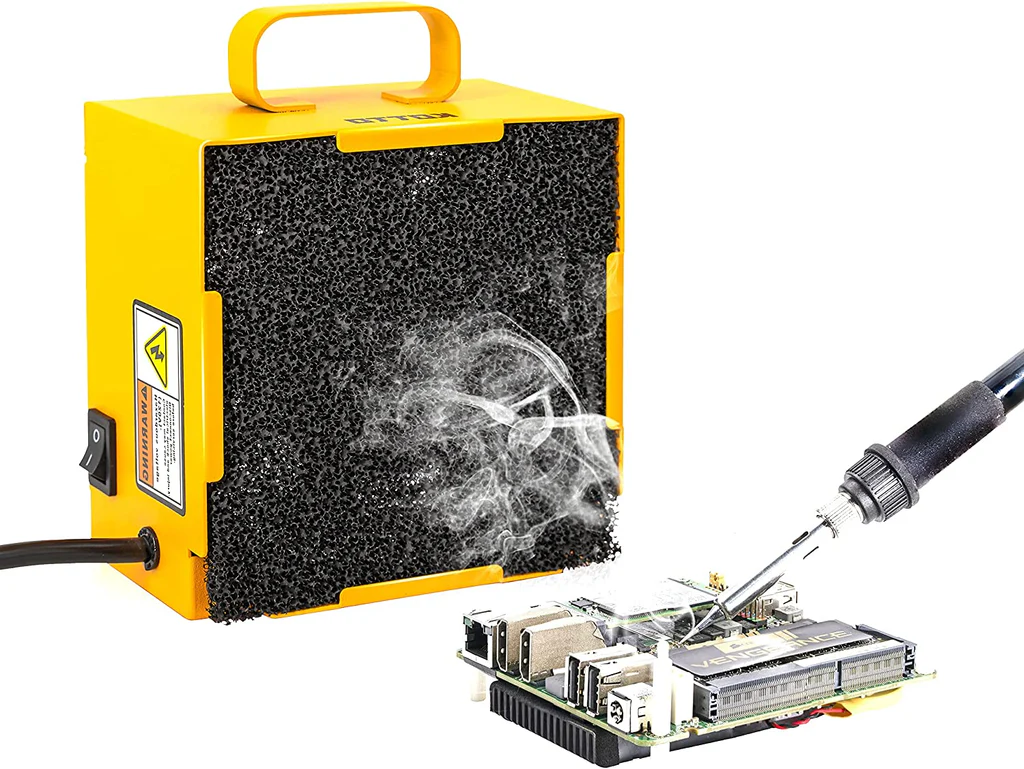
Features:
- Carbon filter
- High-performance fan
Pros:
- Affordable
- Reliable (mine ran consistently for two years and still works)
- Portable
Cons:
- Stationary design
- No adjustable arm
When I first began experiencing headaches, this extractor was my immediate solution. It sits flat on the desk and pulls smoke in one direction. For smaller projects and tight workspaces, it performs well. However, because it cannot be repositioned above the work surface, I often found myself adjusting my posture or shifting my piece to keep smoke moving away from my face.
It remains my secondary extractor for on-site events because it is easy to transport.
Razaire Mini – X60 Smoke Extractor
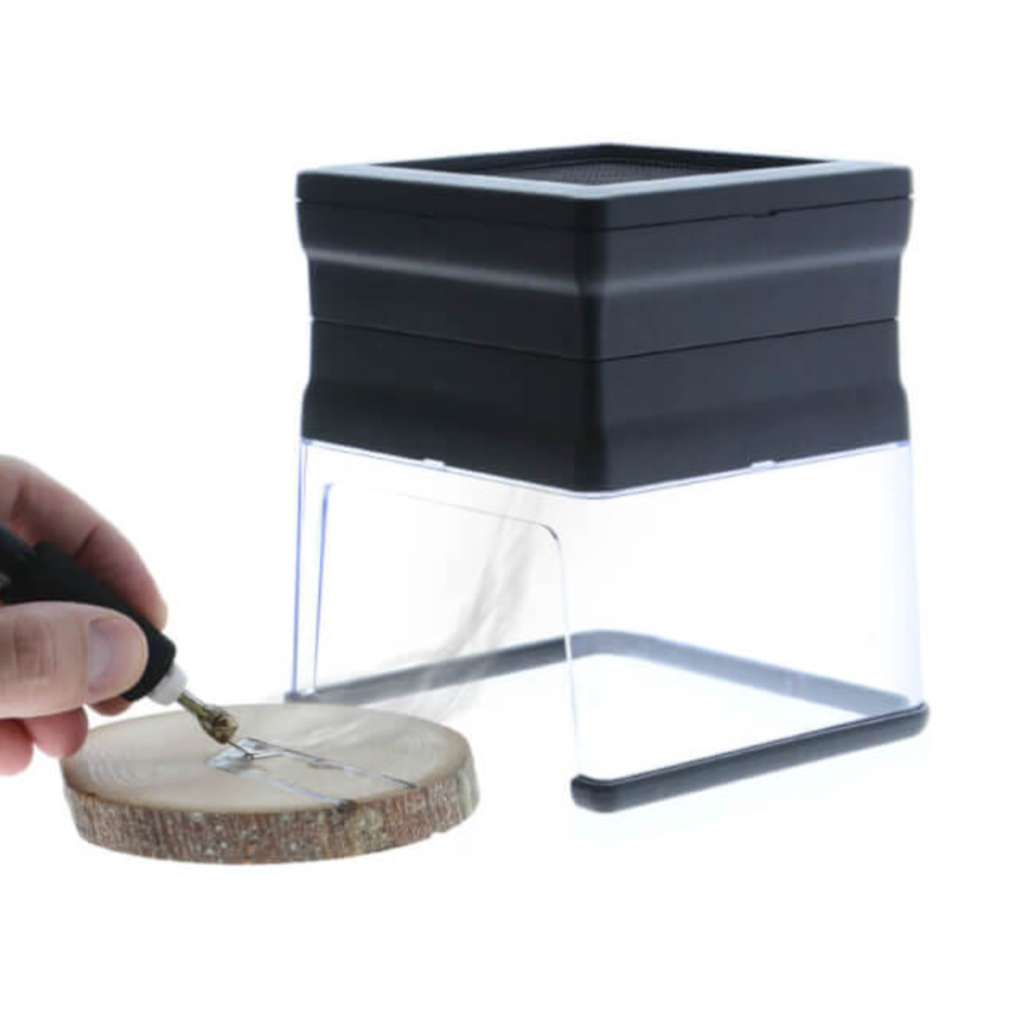
Features:
- Multi-stage filtration
- Two speed settings
- Vertical or horizontal orientation
- Compatible mounting arm system
Pros:
- Highly versatile
- Adjustable configurations for different workspace layouts
- Superior positioning control
Cons:
- Higher cost
- Mounting rods purchased separately
Switching to the Razaire Mini–X60 significantly improved my workflow. The adjustable arm allows me to position the extractor exactly where smoke is being produced. Since my workspace changes depending on the size and shape of the piece I’m burning, this flexibility has been invaluable.
Now I use the Razaire as my primary studio extractor, with the KOTTO as a backup for travel and demonstrations.
Final Thoughts
If you are serious about pyrography — whether you burn occasionally or for 12+ hours a day like I do — protecting your health is not negotiable.
Use untreated wood.
Wear proper filtration.
Ventilate your space.
Invest in a quality smoke extractor.
Your art is important. But your health is irreplaceable.
Do you have a favorite smoke extractor? Tag us @bz_furfur and share what works for you.
Stay safe — and stay unique.