Last year at OMB, we set up our tent the day before Thanksgiving feeling fully prepared with our trusty little sandbags. Twenty-four hours later, on Thanksgiving Day, we got the email every vendor dreads:
Our tent had blown away.
Between the wind, the open lot, and our underpowered sandbags, our pop-up took flight like it had auditioned for The Wizard of Oz. We swore right then that we would never let that happen again.
So this weekend, we headed to the hardware store and built our own professional-grade tent weights—durable, heavy, secure, and absolutely not going anywhere. These are based on a great YouTube tutorial we followed (link at the bottom), but here’s our version with a simplified breakdown.
Materials We Used
- 10′ length of 4″ PVC pipe
- 50 lb fast-set concrete x 2 bags
- 6″ eye hooks x 4
- PVC caps x 8
- PVC cement
- Utility handles x 4
- Nuts, bolts, and extra-large washers (for securing the handles)
How to Build Your Heavy-Duty Tent Weights
These steps follow the same general process shown in the YouTube tutorial, but adapted for the specific setup we used.
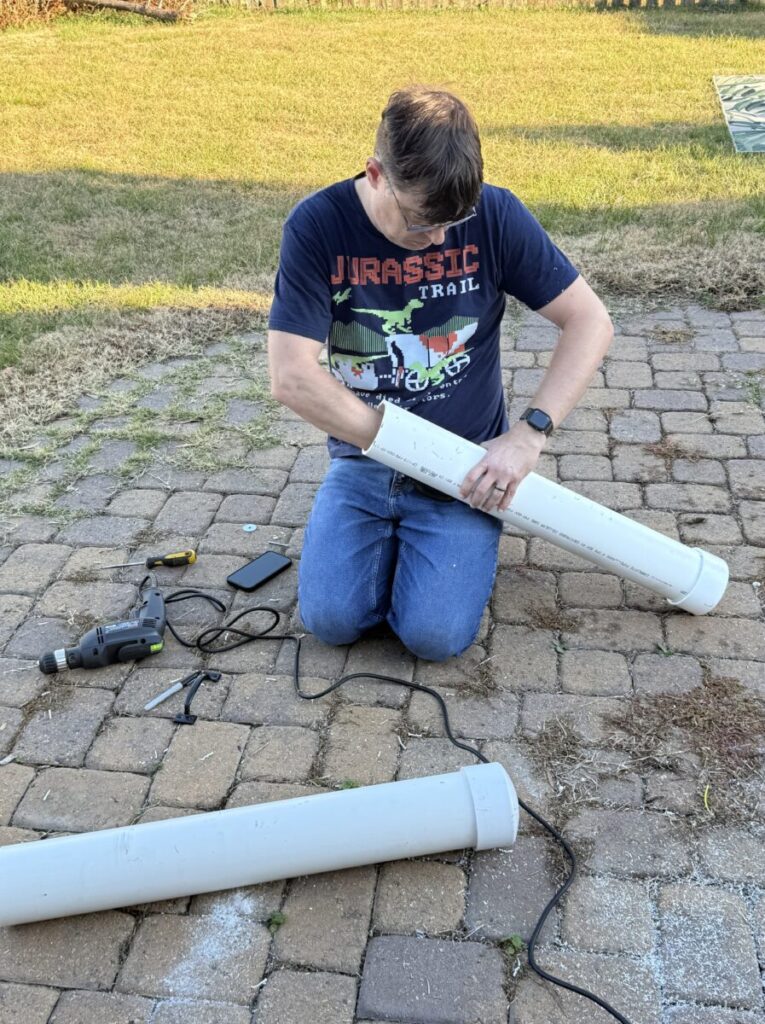
1. Cut the PVC pipe into four equal sections
Each piece should be about 2 ½ feet long.
2. Glue a cap to one end
Use PVC cement to secure the bottom cap. Make sure it’s on tightly—this end will hold concrete.
3. Mark the holes for your handles
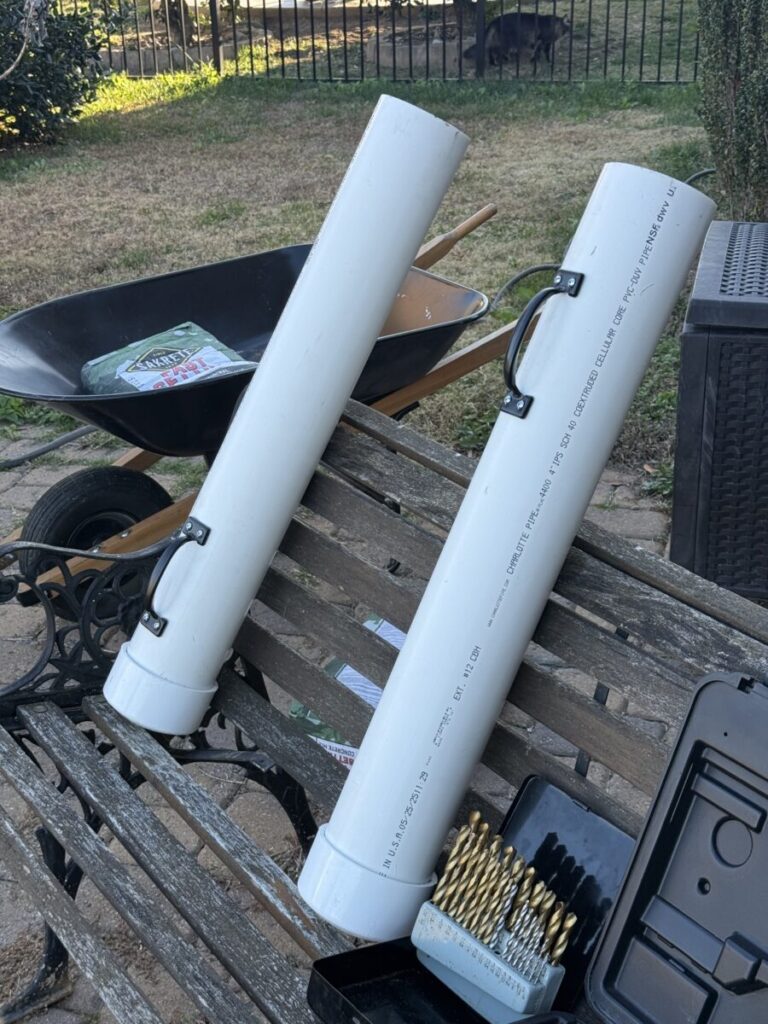
Hold your utility handle in place and mark where the screws will go. Protip: Make sure you put the handles on the side opposite the cap so it is easy to reach when attaching.
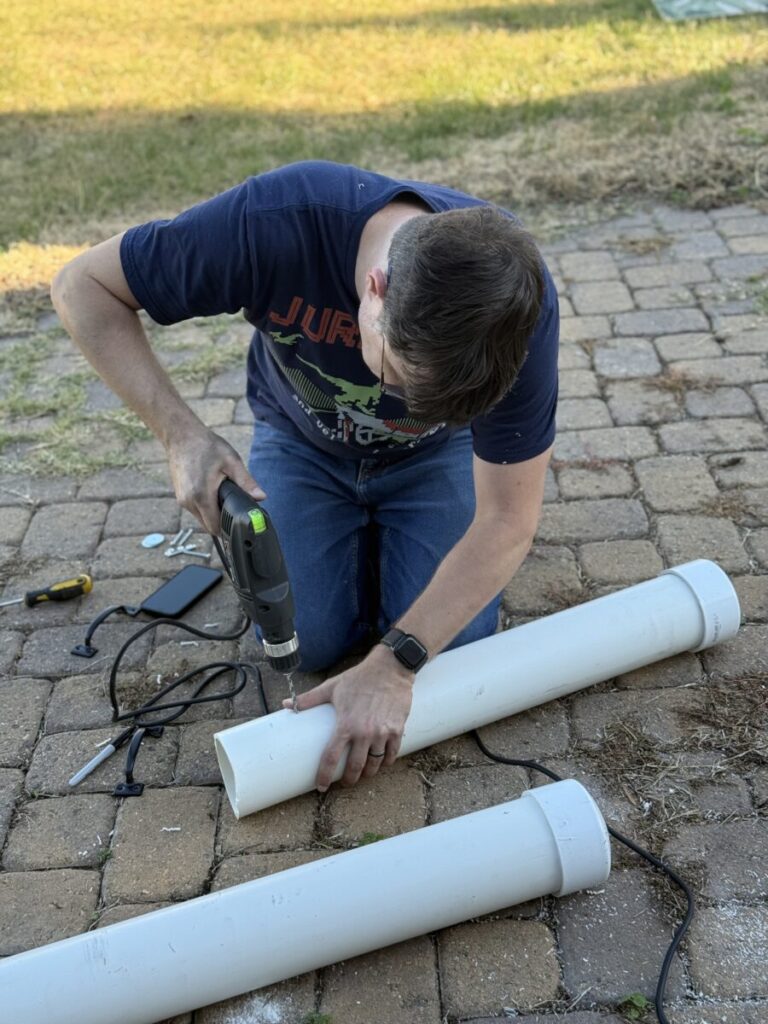
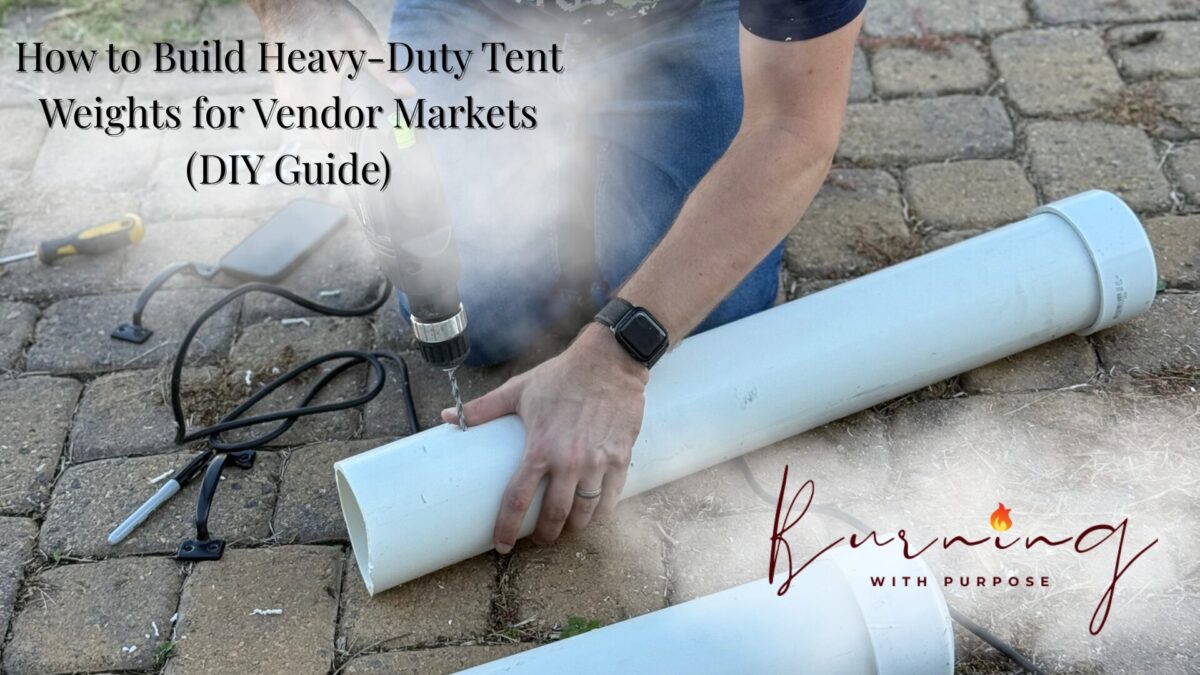
4. Drill holes and attach the handle
Drill through the markings, insert the bolts, and add a washer on the inside before tightening everything down. This ensures the handle stays secure once the pipe is filled with concrete.
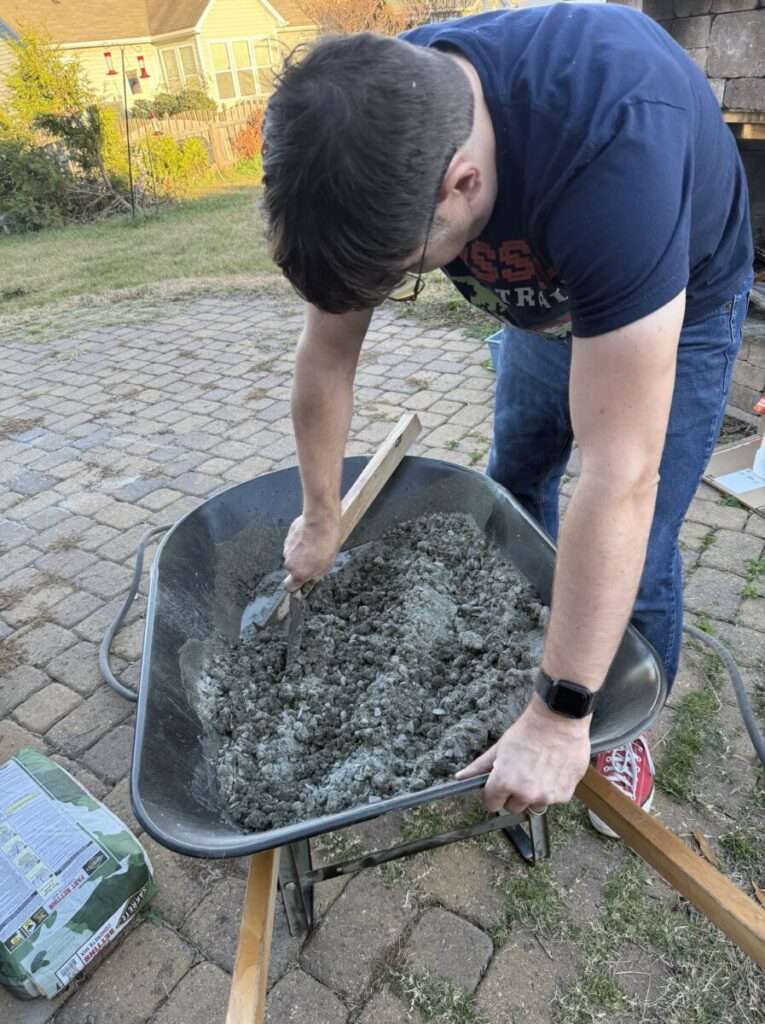
5. Mix the concrete
Follow the instructions on the bag. Fast-set concrete begins curing quickly, so work efficiently.
6. Fill the PVC tubes
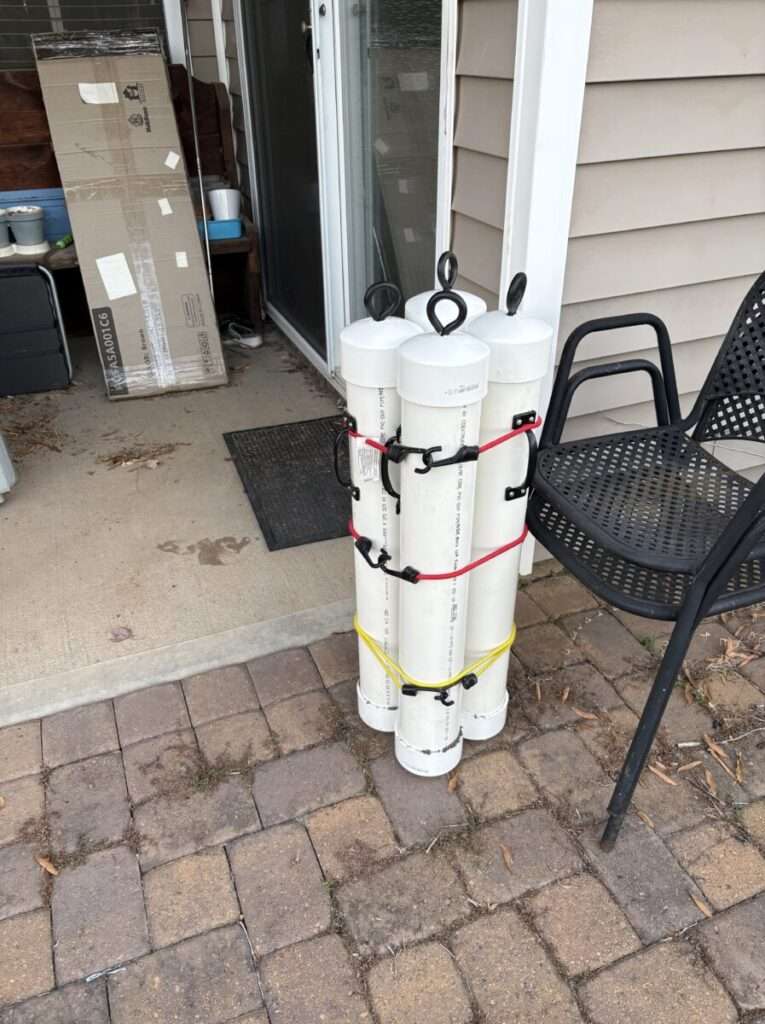
Pour the concrete into each pipe until they’re full. Protip: lash the four pipes together with bungie cords to keep them from tipping over when filling them. Place cardboard underneath to catch any spillage.
7. Prep the top caps with eye hooks
Drill a hole in each of the remaining caps and insert an eye hook before assembly.
8. Glue the top caps to the pipes
Seal them with PVC cement.
9. Let everything cure
Allow the concrete to fully harden according to the curing time on the bag.
How Well Do They Work?
Each completed weight is roughly 30–40 pounds and built to withstand strong gusts. Once everything is set, you can attach the weights to your pop-up tent using:
- rope lashings
- ratchet straps
- bungee cords
- or carabiners through the eye hooks
Best of all?
No more leaky sandbags.
These are clean, durable, long-lasting, and strong enough to keep your tent grounded through serious wind.
Final Thoughts
This project takes about two hours of hands-on work (not including drying time), and the materials are easy to find at any hardware store. If you’re a vendor heading into market season—especially around windy holidays—these DIY weights are worth every minute.
And unlike last Thanksgiving, our tent will not be trying to make a dramatic escape this year.
Video: https://www.youtube.com/watch?v=rqNTjT_7jlE